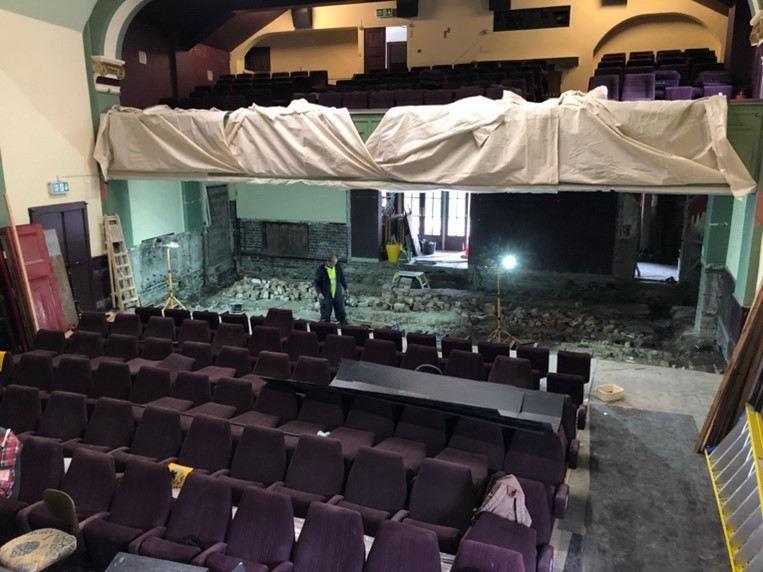
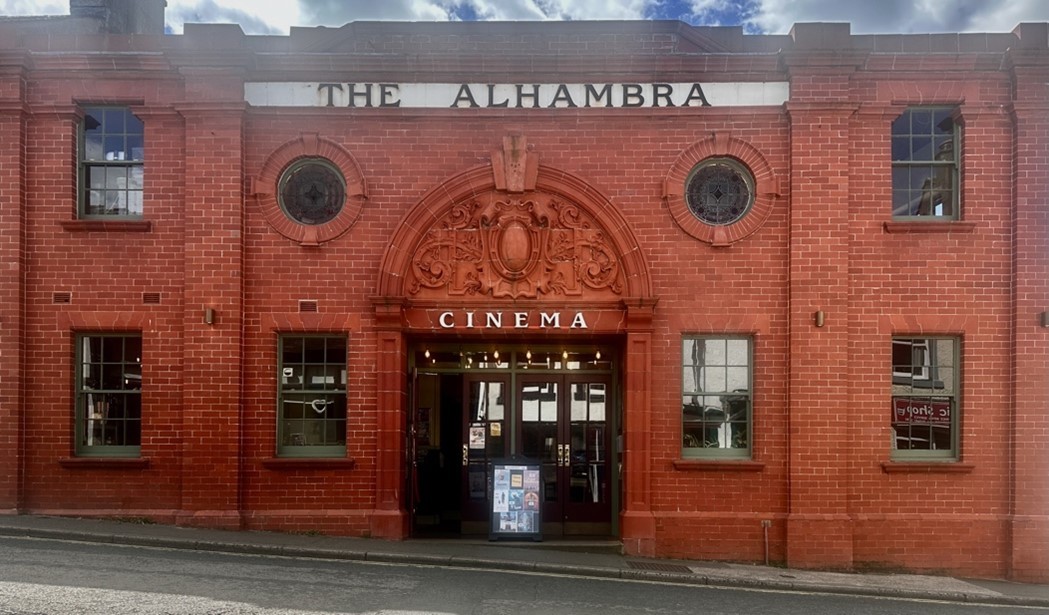
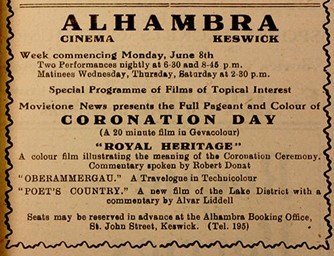
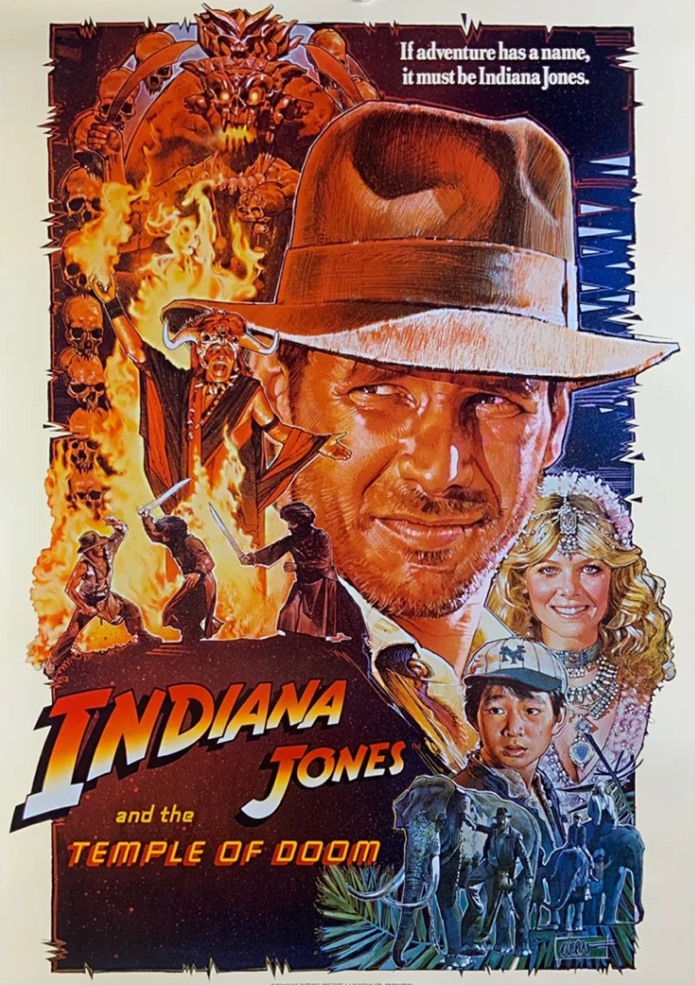
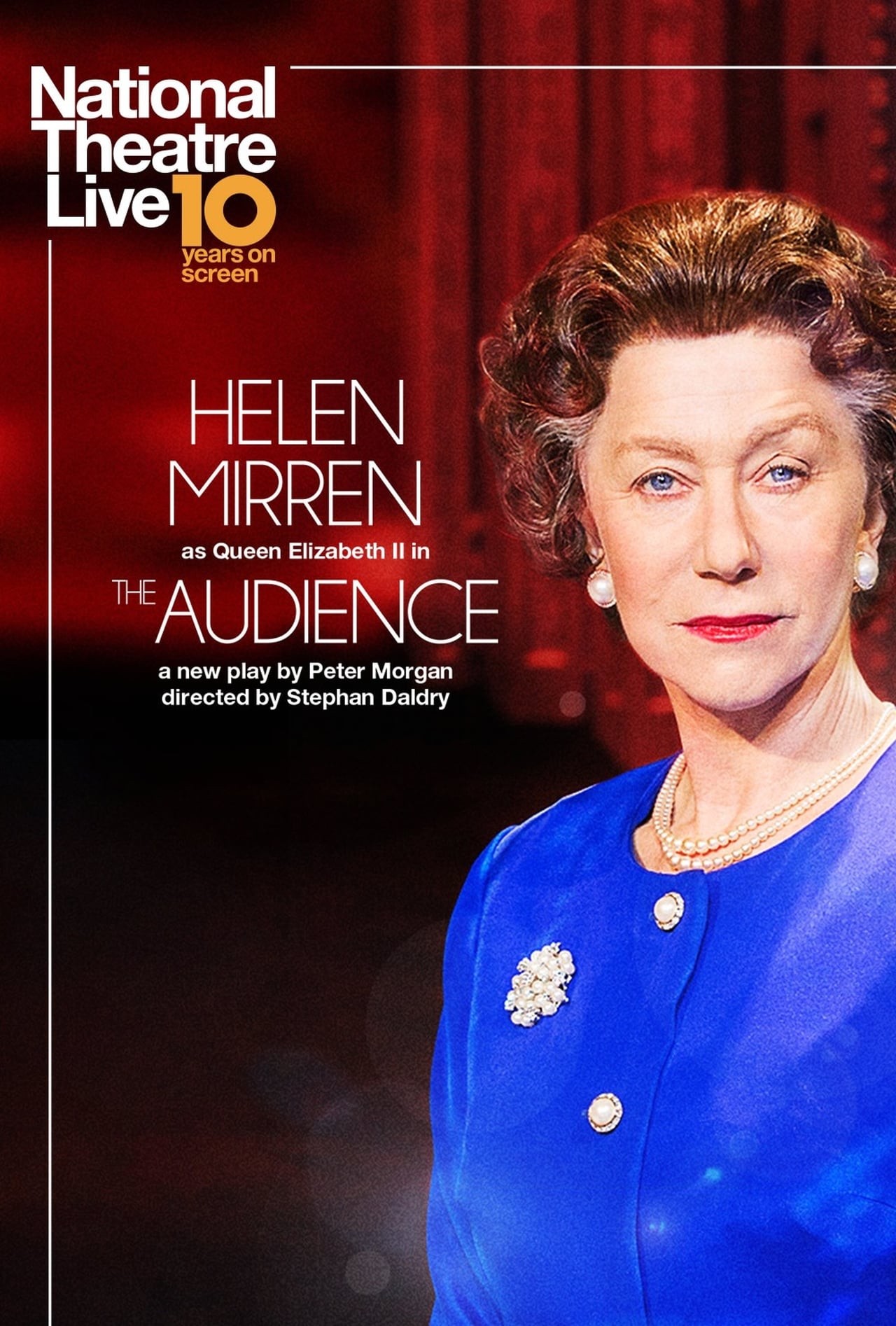
Built in 1913, The Alhambra is one of the UK’s original picture houses, showing films to local and visitor audiences almost continuously since opening a year later. It’s a family owned, independent cinema just off the main town square in Keswick. Fully updated with digital and laser projectors and Dolby sound it is a vibrant part of today’s Keswick entertainment scene. It all started in 1913 when, with £2,000 in capital, the “Keswick Alhambra Theatre Company” was registered. Local family building firm, I Hodgson and Son, set about rapid demolition of the three terraced houses on the current site and the construction of the new building. Opening night was the 22nd January, with the film “Quo Vadis”. At least it should have been opening night, but a technical hitch meant the film couldn’t be shown, and the film was actually first shown the following evening, once a spare part had been rushed to Keswick by train overnight. Not everyone was enthusiastic, Keswick’s Canon Rawnsley vehemently opposed the idea, worried about the “abuses of cinema” which included “incitements to dissipation, grossness, illicit passions, theft, robbery, arson and homicide by the presentation of moving pictures dealing with sensational, sometimes erotic, and criminal incidents.” Films were classified in a simple manner. U films were suitable for all, whereas children had to be accompanied by an adult to watch an A rated film. Local kids found ingenious ways to get themselves into the films they wanted to see, including begging random adults in the queue “will you take us in please” (which inspired the title of a book with a detailed history of the cinema written by Ian Payne to mark its 100th anniversary which is available for sale at the cinema). Movies were silent in the early years, and at The Alhambra a pianist would accompany the film to add drama. Occasionally, and for special occasions, a small band performed instead. Robert Weightman, a Keswick local remembered this time: - Robert Weightman, Keswick local The first talking picture ever to be made was “The Jazz Singer”. Released in 1927 and starring Al Johnson, billed as “the world’s greatest entertainer”, it played that year at The Alhambra but the owners hadn’t invested in the sound facilities to play it in its full glory. Keswick audiences enjoyed the film voiced instead live in the cinema each night by Mr Fred Bucknall, a popular Yorkshire baritone. Many cinemas were sceptical about the new talkies, and it was some time before The Alhambra installed its first sound system. That same year, the lease of the building was taken on by the Simpson family, who ran The Alhambra as a cinema together with two other Keswick entertainment venues, a dance hall and cinema next to the river called The Pavillion and a concert hall called The Victoria on Borrowdale Road. The Simon family’s association with The Alhambra would go on to span several decades. “Talkies” with the original sound finally arrived at The Alhambra in December 1930 and the first talking film screened here was “The Gold Diggers of Broadway”. As war broke out, Keswick, as a rural community, remained a safe haven for holidays and honeymoons. As well as hosting evacuees the army ran a driving school in nearby Portinscale, and several hotels were taken over by St Katherine’s teacher training college and Rodean School. The cinema was popular as the place to see newsreels and public information films, informing as well as educating and entertaining audiences. One evacuee to the area, Margaret Bragg, recalls that children could get free seats for some Saturday screenings when the cinema held “waste paper drives”. The weight of waste paper contributed determined the class of seat awarded, and one local lad cunningly brought a very heavy parcel of paper which turned out to be hiding his family’s bible with its large and heavy brass clasp. He had initially been put in one of the best seats upstairs, though when the bible was discovered his father came swiftly to collect both it and his son. Saturday matinees were an event in themselves, a raucous affair full of unaccompanied children. Des Oliver, a Keswick local remembers the front rows being full of screaming kids who’d paid 2d to sit and watch films such as “The Lone Ranger” and who would then run off to the local woods afterwards to recreate the scenes they’d just watched. Margarte Furness, an evacuee from Newcastle, recalls seeing “The Wizard of Oz” with friends and then cycling four abreast down the Borrowdale Road singing “We’re off to see the Wizard” at the top of their voices. Local films occasionally featured and Moss, a sheepdog from Threlkeld, together with his owner J Relph enjoyed a standing ovation when they appeared in person at The Alhambra as the local stars in a screening of the film about them called “Border Collie”. Television reception in Keswick remained limited and anyway few people had a TV at home and so The Alhambra remained the key venue for the coverage of the death of King George VI, the coronation of Queen Elizabeth II and her tour of the Commonwealth. In 1957 the business was sold by the Simpson family to the Graves family, who owned and ran cinemas, dance and bingo halls across several nearby towns. The Graves family oversaw a number of physical and technological changes during their ownership of The Alhambra, and their involvement with the cinema would go on to last for nearly sixty years. The sweet shop and advance booking office, which had been a separate building to the left of the cinema, was sold and converted back into a house, and a new ticket and refreshment kiosk was built inside the cinema itself facing the entrance doors. The balcony was refloored and new, individual, seats were fitted. The projector’s carbon arc lamps were updated to the latest Xenon lamps and a larger screen together with Cinemascope was installed, which together with the installation of the cinema’s first Dolby sound system, made for a much improved cinema experience. The cinema had 11 screenings per week, with a wide range of films, but by the late 1960s cinema audiences were dwindling and The Alhambra was threatened with closure for the first time. Concerned picture goers launched a petition to keep the cinema open, and the Graves family’s pragmatic solution was to draw from their experience at other venues and help The Alhambra remain in business by adding bingo to the weekly repertoire. So from 1967, Monday and Friday became bingo nights with Bingo machines fitted to the seats on the left hand side of the stalls. It was a lean decade for The Alhambra and for British cinemas in general. Audiences’ appetite for entertainment developed into other channels. Alternative music, disco and theatre venues developed and the newly opened A66, together with and an increase in car ownership, made the attractions of larger, nearby towns increasingly accessible. By the end of the decade there were no shows at all at The Alhambra on Saturdays and the cinema was only open for four evenings each week. With the cinema in trouble, Barbara Graves took over responsibility for it in 1982 and immediately made a huge effort to address the dire situation. She organised a face lift of the interior, and shrewdly identified the importance of the visitor market, working hard to encourage local hotels and B&Bs to promote the cinema to their guests. She implored locals to “use it or lose it” and persuaded her family to allow The Alhambra to show more first run films. At the time, films would be physically sent to cinemas on reels, and cinemas in larger towns would receive them first, and be known therefore as first run cinemas, whereas those in smaller towns like Keswick would only then receive the films later. The consequent success of her idea proved her point, with the first example, “Indiana Jones and the Temple of Doom”, seeing queues of people down the side of the cinema and all four screenings selling out on its first day. In low season, even this approach could not keep the cinema running throughout the year and until 1989, the cinema would close for the winter from November through to March. The Alhambra was being run on a shoestring budget in order to survive, with Barbara supported by just one usherette on each floor, a person on the ticket counter and a projectionist. She appointed Tom Rennie in 1991 who managed the cinema with an even smaller staff, backed up by the hugely competent Joan Green, an Alhambra stalwart who had been working at the cinema since the 1970s. In 1999 the Keswick Film Club was set up by Tony Martin to bring more eclectic, often foreign language, films to The Alhambra. The Film Club quickly became a success, screening a weekly film through the winter months. The first Keswick Film Festival, run by the Film Club, took place in February 2000, an event that has run every year since. The festival has seen many famous attendees and participants over the years, including Ken Loach, Nicholas Roeg, Andrea Arnold and Dame Janet Suzman. Producer Anwen Rees-Myers brought both a film and her Husband, John Hurt, to the festival, and Sir John later became the festival’s Patron, presenting prizes for ”The Ospreys”, the festival’s annual short film competition. In 2006 the Film Club won the “Film Society of the Year” award. In 2006 another local family became involved in the running of The Alhambra as Alan Towers took on the lease of the business together with The Alhambra cinema in Penrith from the Graves family. The two Alhambra cinemas each benefitted from a refit, inheriting the seats from the Lonsdale cinema in Carlise which was being demolished. Alan concluded in 2012 that The Alhambra cinema in Keswick was unviable, and the cinema would have closed down at that point were it not for Tom Rennie, who had by then been running the cinema for its various owners for over twenty years. Tom took a five year lease from the Graves family and set about stabilising the business. For a cinema that is so dependent on the visitor audience, with a stroke of luck he was rewarded with the perfect combination of a damp summer and a strong film slate. The Bond move “Skyfall” together with “The Best Exotic Marigold Hotel” were both hugely popular and gave his new business model a great start. Tom focused on keeping costs low, which was helped by the switch from showing 35mm film on reels to digital projection, which is a more automated technology. National Theatre Live had been launched ten years before The Alhambra finally, in 2013, added the capability to show its live performances via satellite. The first screening in June that year saw Helen Mirren’s critically acclaimed performance as the H.M. The Queen in the play “The Audience”, beamed directly from London’s Geilgud Theatre to audiences in Keswick. The Alhambra has been able to bring the best of London and world theatre, together with opera, ballet and concerts to Keswick on a regular basis ever since. The Alhambra celebrated its 100th anniversary in 2014, fittingly via the medium of film, as local film maker Joel Baker’s film “Lights, Camera…Alhambra!” was premiered at the Century Film Festival. The day of the anniversary itself, January 22nd, was celebrated with the first ever screening of “The Clouded Yellow”. Released in 1950 it was filmed partly in the Keswick area and starred Trevor Howard and Jean Simmons, together with many local Keswick folk who had appeared as extras. It had been shown at the time in Keswick but not at The Alhambra, only at its then sister venue The Pavillion. In 2016 Tom Rennie’s lease on the building was coming to an end and the Graves family offered to sell the building to him. At 73 years of age Tom, undaunted, saw this as an opportunity to establish a “Cinema Paradiso style” family business, and so the Rennie family became the new owners, ready to take the cinema into its next stage of family ownership. With the whole family involved, improvements were made, including the introduction of online booking and a wider choice of films. A crowd-funded renovation of the auditorium in 2019 helped reveal many of the original features of the cinema that, over the years, had been hidden under ever-increasing layers of paint. As a single screen cinema, The Alhambra was hampered in its ability to survive, being restricted by the increasingly onerous terms of the film distributors and at risk of either having too few films on offer to be seen as interesting or not having films screened on release and hence being seen as out-of-date. Single screen cinemas across the country were struggling to survive, indeed many had closed, and the family was aware of just how vulnerable The Alhambra was to any shock or downturn. Tom’s low-cost business model had proven successful at enabling the cinema to survive through yet another dark period, but in 2020 along came the Coronavirus and the cinema was obliged to close. Tom had largely stepped back and his daughter and son-in-law were running the cinema but were suffering from the lack of stable income from the business. The future of The Alhambra was again in doubt and the family were not able to make the kind of changes or investment that were necessary. Not for the first time in its hundred-year history The Alhambra badly needed an injection of new blood and luckily a new family expressed an interest in becoming involved. The Moore-King family brought project management and marketing skills and commercial experience that would prove to be just what The Alhambra needed next. In 2021 a new business plan was written, which required an investment of over £300,000 to build and equip a second screen, together with a remodelling of the cinema reception and kiosk area. It was clear to both families that this was the only way to grow the business, put it onto a safe footing and ensure it would remain viable. With no possibility to expand outwards or upwards, during 2021 the second screen was squeezed into the middle of the building underneath the balcony. The additional screen was designed to interfere as little as possible with the existing auditorium, thereby maintaining its original stalls and balcony layout, something which so few cinemas retain today. Carefully engineered, the second screen sits on separate foundations and has extensive soundproofing. Despite the building’s age, the two screens are acoustically much better separated than anyone imagined possible. The new foyer area is a stylish improvement and finally offers space for customers to linger, for conversations about films, vintage cinemas and of course the weather to be enjoyed by all, and to enable the much more welcoming and friendly atmosphere that is so tangible today. At the same time, and through the generosity of the cinema’s supporters, the building’s stunning façade was cleaned and repointed. Surviving timber windows were restored and new, matching ones refitted where openings had been bricked up. New lighting was installed and the two stained glass feature windows were meticulously repaired by local craftspeople. On October 15th 2021 the reopening film was the appropriately named new James Bond film “No Time To Die”. Despite racing to meet the deadlines, the building project had overrun by two weeks meaning the film had already been out for a fortnight by the time it was first shown. Loyal local audiences though had generously waited to watch it here, thereby contributing to the excitement and vibrancy of the cinema that night. Queues were again seen down the side of the cinema as people excitedly waited to see the newly refurbished Alhambra and enjoy a great Bond film. The second screen has enabled the cinema to show a far wider range of films and to be in a stronger position when negotiating with the all-powerful film distributors. Together with improvements made to the reception area and the upgraded drinks and refreshments menu, this has indeed put the cinema onto a stronger and safer path. The new commercial reality means that it will take over seven years of working long hours, mostly unremunerated, for the £300,000 investment to be repaid. By late 2024 it had become apparent that the robust fiscal discipline now required and the extensive hours to be worked were not an option the Rennie family could commit to. In early 2025 they sold their remaining half of the business marking the end of another era in the life of The Alhambra. Today the responsibility for the safeguarding the future of the cinema has passed to the Moore-King family. In February 2025 the Keswick Film Festival celebrated its 25th anniversary with a richly curated programme that was, as is typically the case, packed with the films that went on to win major awards. Thanks to the Festival it’s Keswick audiences that remain some of the first to see what later turn out to be the greatest of films each year. As The Alhambra cinema embarks on the next stage of its life it remains proudly independent and, as for nearly a century now, family owned and run. With lots of original and vintage features, it’s fully up to date and we’re sure you’ll find it thoroughly enjoyable to visit. Please do feel welcome, we love to chat about films and the cinema, or indeed anything at all, so please make yourself at home. Jonathan Moore & Graham King
The Alhambra Cinema, Keswick
A Brief History Through the Decades

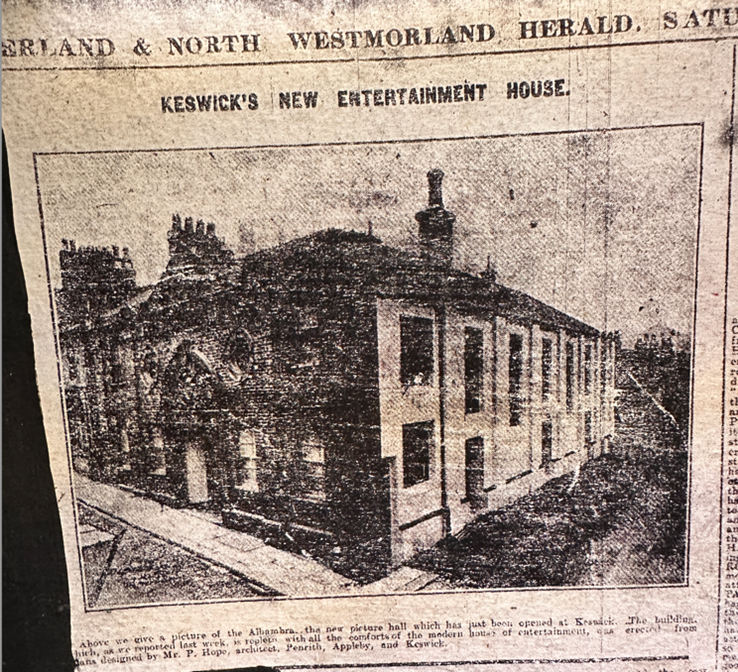
1914

1920s

1930s

1940s
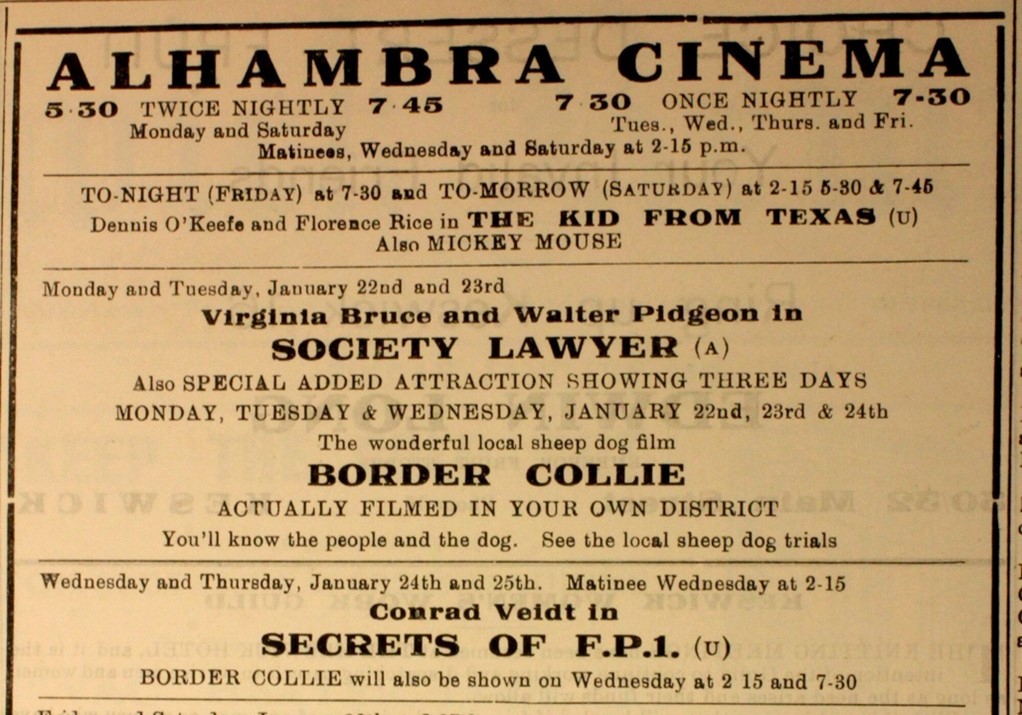
1950s
1960s
1970s
1980s
1990s
2000s

2010s
2020s